Public art has assumed renewed relevance in today’s fast-changing cityscapes, where rapid urbanisation and infrastructure-driven growth often risk erasing local character and shared memory. The leisurely luxury of characterising art has faded with time as contemporary art takes up space around us. Materials that are being used have changed too.
As cities expand and transform, public art offers a means to humanise urban environments, creating spaces for reflection, interaction, and collective identity. Beyond aesthetic enhancement, it fosters social engagement, encourages dialogue, and nurtures a sense of belonging among diverse communities. In an era marked by speed and fragmentation, public art acts as a cultural anchor, reconnecting citizens to place, history, and each other while contributing to more inclusive, meaningful, and emotionally resonant urban spaces.
The Zinnov Foundation Conference on Art in Public Spaces
10/1/2026
Freedom Park, Bangalore
Written by
Manju Prasannan Pillai, IPOS,
Chief PostMaster General, Kerela State (Retired)
The discourse on art in public spaces has been gathering momentum. The post-pandemic era realigned the need for public spaces as pivotal to community building. Community spaces help in engaging citizens and in forging identities. Art in public spaces is now a powerful transformational tool for well-being that transcends mere aesthetics.
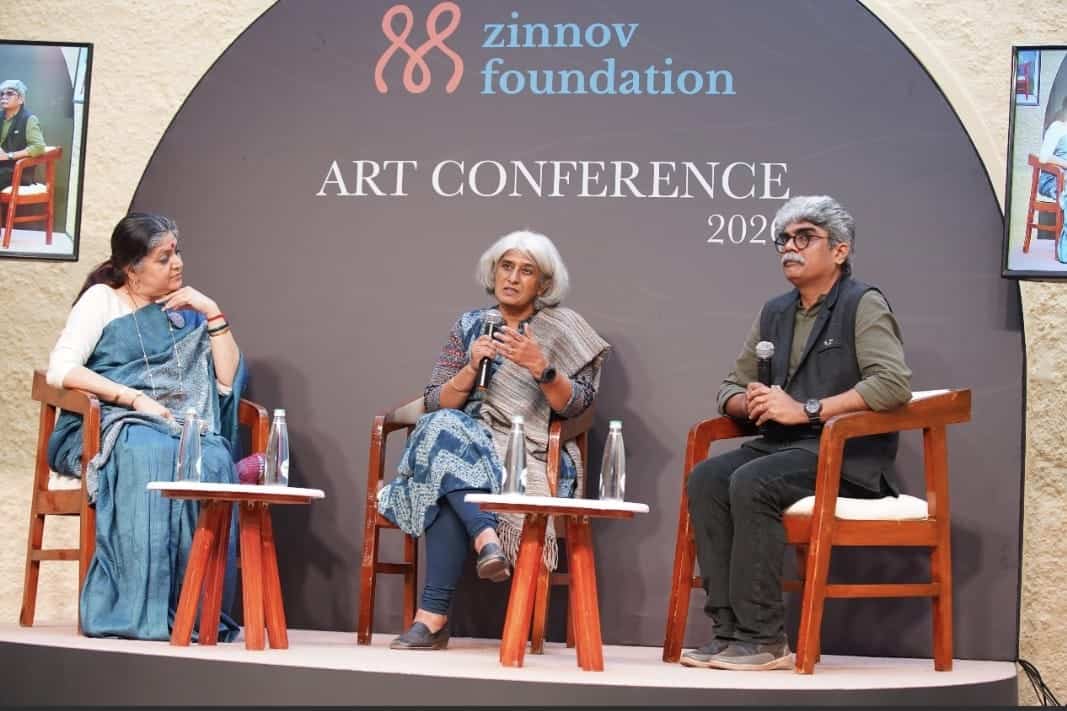
The conference held by the Zinnov Foundation on 10/1/2026 on Art in Public Spaces was a well-timed endeavour to bring these discussions to the fore. Held in the iconic Freedom Park in Bangalore, at Barrack 12—which once housed prisoners post the 1857 mutiny—it presented an interesting backdrop.
The conference had three panels for discussion, each of which touched upon significant and specific aspects of public art. The first focused on the need for documentation and information with regard to public art in India, the challenges of accessing data regarding policy, legal safeguards, maintenance, and the longevity of artworks. The panelists were renowned art writer and curator Gayatri Sinha and Shatavisha Mustafi, the winning finalist of the open-call research scholarship from the Zinnov Foundation. It was moderated by Kamini Sawhney. Gayatri Sinha threw light on the historical events that led to the emergence of public art in India and highlighted the hurdles faced due to the lack of proper guidelines and legal safeguards. Shatavisha Mustafi shared her experiences during the course of her research and pointed out the lack of data regarding public art and the difficulty in accessing important information.
The second panel, titled Beyond Pedestals: Material for Art in Public Spaces, featured well-known sculptor Shanthamani Muddaiah and renowned artist Arun Kumar H G who is also the founder of the SARA Centre, Shimoga, discussing the subject of materials used for public art. Yamini Telkar, a renowned art curator and cultural expert, moderated the session. A lively discourse on the ephemerality of materials and the need to move away from conventional materials like stone and cement to lighter, more sustainable ones was particularly engaging. Both panelists stressed the need to use materials that allow the public to touch or feel the art installations. Such immersive engagement would only enhance the experience. The practice of distancing artworks from the public was seen as a thing of the past.
Shanthamani Muddaiah spoke about her use of charcoal and sustainable materials, and the need to lighten the footprint, which she felt was imperative in the long term. This viewpoint was reiterated by Arun Kumar H G, who felt that using local, site-specific materials lent greater meaning to sculptures. He spoke about the early challenges at SARA and how it has now grown into a centre that promotes strong sensibilities of conservation as well as aesthetics.
Yamini Telkar, drawing from her long experience in public art, emphasised the need to involve the sensibilities of local citizens to create lasting bonds with installations.
The third panel focused on the gap between policy and implementation in public art. The panelists—Manju P. Pillai, art writer and retired civil servant, and Tejal Kamble, research scholar and winning finalist in the open call by the Zinnov Foundation—discussed the challenges and hurdles of implementing public art policy.
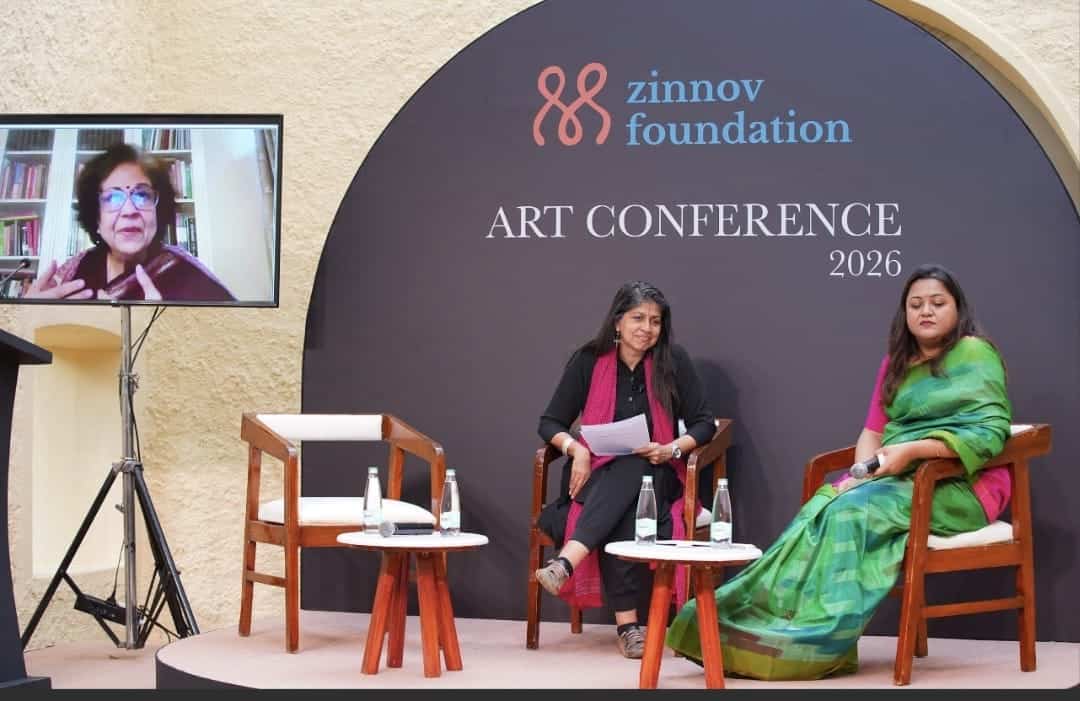
Tejal Kamble narrated experiences during her research where incidences of huge gaps between conceptualisation, expenditure allocations, and actual implementation of public art works were glaring loopholes. She highlighted examples where a lack of clear accountability led to shoddy work and also discussed issues of longevity and maintenance. Manju P. Pillai spoke about the absence of policy as a consolidated framework or set of guidelines. She emphasised that it was imperative for a policy document to be in place to assist stakeholders and serve as a roadmap. Apart from a policy framework, implementation guidelines and single-window permissions by local bodies were necessary to facilitate quality work. Documentation by agencies such as the Delhi Urban Art Commission (DUAC) could be replicated elsewhere, and the Central Government could serve as an overarching umbrella to facilitate public art through a well-thought-out policy. At the implementation stage, urban local bodies could ensure quality execution.
Yamini Telkar spoke about the need to protect public art and make policy implementation accountable. To sustain legacy, citizen roles need to be intensified.
The conference discussed the challenges and hurdles of public art in India, the need to create frameworks, engage communities, go beyond beautification, and create legacies and cultural identities. It presented powerful ideas and opinions and actively engaged audiences and stakeholders.
There was also a film on Lalbagh created by Vaibhav Shah, which was immersive and intense. The idea that public spaces themselves can become works of art reiterated the need to protect the cultural legacy of the city.
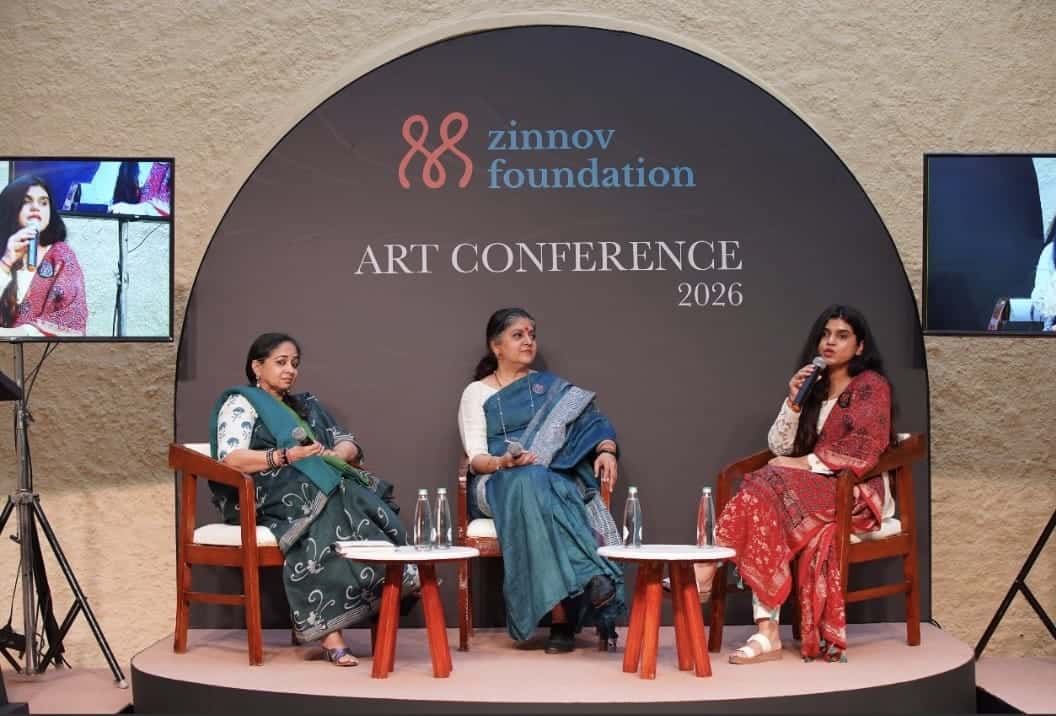
The Zinnov Foundation’s endeavour to convene discussions on art in public spaces is commendable. It opens a dialogue that can pave the way for concrete action and lead to evolving trajectories for the future.